


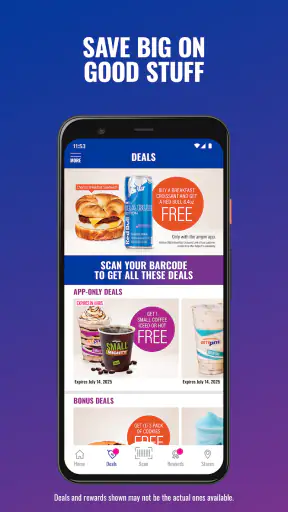
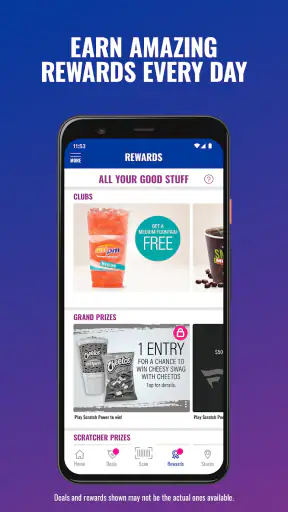


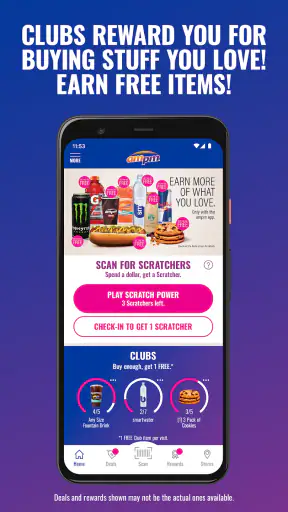
I approached ampm as the kind of food and drink app you open with a practical question: can it make a quick stop more worthwhile without adding another complicated task to the day? Developed by ampm, it focuses on deals, savings, and prize opportunities rather than trying to replace every food service on your phone. That narrow purpose is also its main strength. When I am already considering an ampm visit, having the store’s offers in one place feels more useful than browsing a broad restaurant app filled with places I will not use.
The app is free, carries an Everyone 10+ content rating, and has been available since October 1, 2012. Its long presence and more than a million installs give it the feel of an established companion for regular customers rather than a short-lived promotional experiment. I would not install it expecting a full meal-planning tool or a universal delivery service. I would install it to check whether a planned convenience-store stop can cost less, offer something extra, or give me a reason to choose ampm over an ordinary alternative.
How ampm feels in everyday use
Quick access matters more than visual ambition
My first impression is that this kind of app succeeds when it gets me to the useful part quickly. A discount app has a short window of attention: I may be standing in a parking lot, deciding what to buy, or checking my phone before leaving home. The important question is not whether the interface feels luxurious. It is whether I can understand the current opportunity without having to study several layers of menus.
That makes perceived speed especially important. The app’s role is simple enough that I expect a focused experience: open it, look for a relevant deal or savings opportunity, and decide whether it changes my purchase. On a reasonably current device, that is the standard I would use to judge it. A brief loading pause is tolerable; repeated waiting while moving between basic sections would undermine the entire point of using a convenience-focused app.
I also like the fact that its purpose is easy to explain to another person. If a friend asks what it does, I can say that it is the ampm app for checking exclusive offers, saving money, and taking part in prize-related promotions. That clarity is more valuable than a long list of loosely connected functions. The best use is direct and occasional, not endless browsing.
What to do before walking into the store
A useful routine is to check the app before leaving, rather than waiting until I am already at the counter. That gives me time to see whether an offer fits what I actually planned to buy. It also prevents a common mistake with deal apps: changing a purchase simply because a promotion is visible. I find the app more helpful when it confirms a decision I was already close to making.
For example, imagine I am stopping for a drink and a snack on the way home. I would open ampm first, scan the available savings, and compare the offer with my original plan. If it applies naturally, I can use it as a small reduction in the total or choose a better-value combination. If it requires buying something I would not otherwise want, I would treat the apparent bargain cautiously. The app can reveal an opportunity, but it cannot make an unnecessary purchase sensible.
This is one of the less obvious trade-offs: the value depends as much on discipline as on the promotion itself. People who regularly visit ampm and already know what they want are likely to benefit more than people who install it only because the word “prizes” sounds exciting. I would use it as a decision aid, not as a reason to spend more.
Performance during heavier use
Most sessions should be light. Checking a deal, reviewing savings, or looking at a prize-related opportunity is not the same workload as editing video, streaming for hours, or playing a demanding game. Because of that, I would expect modest resource demands during normal use. The app should not need to dominate storage, battery, or memory simply to show its core information.
The more revealing test comes when the app is used in an awkward real-world setting: weak reception near a store, a phone with many apps already open, or a device that has not been restarted recently. In those moments, the experience can feel slower even when the app itself is well designed. I would avoid making a final purchase decision based on a screen that has not finished loading. Opening it a little earlier, while connected reliably, is a small habit that reduces frustration.
Heavy use can also mean repeated checking over several stops rather than one long session. If I am traveling, commuting, or visiting ampm more than once in a day, I would pay attention to whether the app resumes cleanly after being left in the background. A practical workflow is to check the relevant offer, remember or note what matters, and close the app instead of keeping it open continuously. That preserves battery and avoids turning a simple savings check into unnecessary background activity.
I would not describe this as an app that should be judged by benchmark numbers. Its performance matters in short bursts. The useful question is whether it responds promptly enough at the moment I need it, whether it remains understandable under pressure, and whether it recovers gracefully after switching to another app. Those qualities matter more here than raw technical speed.
Stability and recovering from interruptions
Reliability is particularly important for a deal app because timing can affect whether an offer is useful. If the app closes, loses its place, or needs a complete restart just as I am trying to check something, confidence drops quickly. I would rather have a plain, predictable experience than an ambitious one that occasionally makes me repeat the same steps.
Phone interruptions are normal. A call, a message, a change from mobile data to Wi-Fi, or simply locking the screen can happen while I am using it. My preferred approach is to reopen the app calmly if a session has been interrupted, then verify the relevant information again before acting. That extra check is worthwhile because promotional details are the part that directly affects my decision.
The app’s current version is 3.17.0-1239, and it supports devices running Android 6.0 or later. Those details suggest that compatibility is not limited to only the newest phones, which is useful for people who keep a dependable older handset. At the same time, an older operating system can bring its own limitations in speed, memory handling, and system-level behavior. I would keep the device updated where possible and avoid judging the app solely by performance on hardware that struggles with many modern applications.
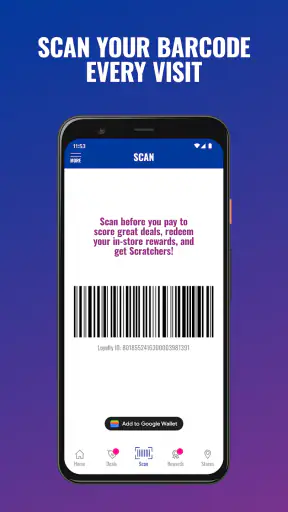
There is also a recovery habit I recommend for any app used at a checkout: do not assume that seeing an offer is the same as successfully applying it. I would read the instructions shown in the app, confirm that the promotion is still visible when I need it, and ask the store staff if a step is unclear. This is not a criticism unique to ampm; it is simply the difference between browsing an offer and completing a purchase with confidence.
Older phones, busy phones, and limited attention
Because the minimum operating system is Android 6.0, ampm is approachable for users who are not carrying a brand-new phone. That is a meaningful advantage for a convenience app. Many people keep an older device as a backup, and a savings tool is more useful when it does not demand premium hardware.
Still, operating-system support does not guarantee identical results on every device. A phone with limited free space or very little available memory may reopen apps more often, reload screens, or take longer after switching away. If I were using ampm on an older handset, I would close demanding apps before entering a store and make sure the phone has enough room for ordinary updates. Those simple steps can improve the experience without pretending that software can overcome every hardware constraint.
Screen visibility is another practical concern. A deal is only useful if I can read it quickly in bright outdoor light or inside a busy store. I would increase brightness temporarily and avoid waiting until the last second to inspect the details. This is a small workflow improvement, but it matters because convenience-store decisions are often made while standing, walking, or carrying other items.
For people who use iOS, the sensible question is not whether the app replaces every other food app, but whether ampm is part of their normal routine. For Android users, the stated Android 6.0 minimum makes the compatibility picture straightforward. In either case, I would choose the platform version that matches the phone I already use rather than installing it on a device that is inconvenient to carry.
Where it beats ordinary alternatives
The usual alternative is simply walking into a store without checking anything first. That is effortless, but it leaves potential savings undiscovered. Another alternative is a broad coupon or restaurant app. Those services may cover more businesses, yet their breadth can become noise when I only want to know what is relevant to ampm.
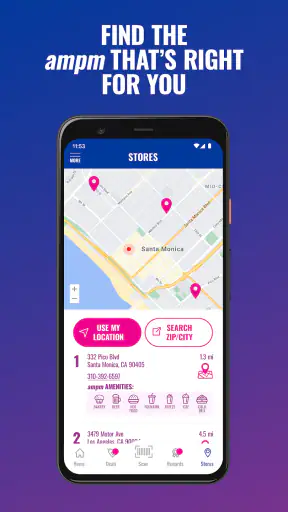
This app has an advantage when the purchase is already tied to ampm. Its focus reduces the time spent filtering unrelated restaurants, delivery options, and generic promotions. I can treat it as a brand-specific layer on top of an existing habit. That is more efficient than searching a large marketplace for a store I have already chosen.
The trade-off is equally clear. If I am comparing several nearby restaurants, looking for delivery, tracking nutrition, or planning a full grocery shop, a broader food service will probably be better. ampm is not a universal food discovery tool. Its usefulness rises when the destination is known and falls when I want open-ended comparison.
I would also separate savings from prizes. Savings can affect a decision immediately; prize opportunities are more speculative and may not matter to someone who wants a straightforward discount. Users who dislike promotional mechanics may find the app less appealing than a simple price-comparison approach. I see the prize element as an optional reason to open the app, not the foundation of its everyday value.
Who will get the most from it
The strongest audience is made up of regular ampm visitors, commuters, drivers making frequent short stops, and anyone who likes checking a deal before paying. It is also a reasonable fit for households where small purchases add up over time. A quick look before a routine stop can make the app worthwhile even if I do not use every offer.
I would be more selective if I rarely visit ampm or if my food choices are driven by delivery, restaurant variety, or detailed dietary filtering. Installing a dedicated store app only makes sense when the store appears often enough in my routine. Otherwise, the additional app may create more notification and attention overhead than practical benefit.
The rating information points to broad acceptance: the app holds a 4.6 average from around nineteen thousand ratings, with roughly 7.8 thousand written reviews. I read that as encouraging evidence that many users find the basic concept worthwhile, while remembering that a rating cannot predict how well it will fit my habits. A frequent customer and an occasional visitor can have very different opinions of the same tool.
My practical setup and final judgement
I would keep the app available only if I had a realistic ampm routine. Before a visit, I would open it on a stable connection, review the relevant savings, and decide in advance whether the offer matches something I genuinely need. At the store, I would check the details once more instead of relying on memory. Afterward, I would close it unless I had a specific reason to return. This workflow keeps the app useful without allowing promotions to dictate every purchase.
My overall view is positive, but deliberately limited. ampm is a focused food and drink savings app, not a replacement for delivery platforms, restaurant guides, or personal budgeting tools. Its free price removes the main barrier to trying it, and its established user base suggests that it has found a practical role for many customers. The developer, ampm, has kept the product centered on the store relationship, which is exactly where I think it makes the most sense.
My recommendation is simple: if ampm is already one of your regular stops, ampm is worth installing and checking before you shop. I would expect the best results from short, purposeful sessions and from users who compare an offer with their original plan rather than chasing every promotion. If you want broad restaurant discovery or a complete food-management service, choose a different category of app. For a regular ampm customer who wants a faster way to look for savings and occasional prize opportunities, this focused approach is practical enough to earn a place on the phone.


